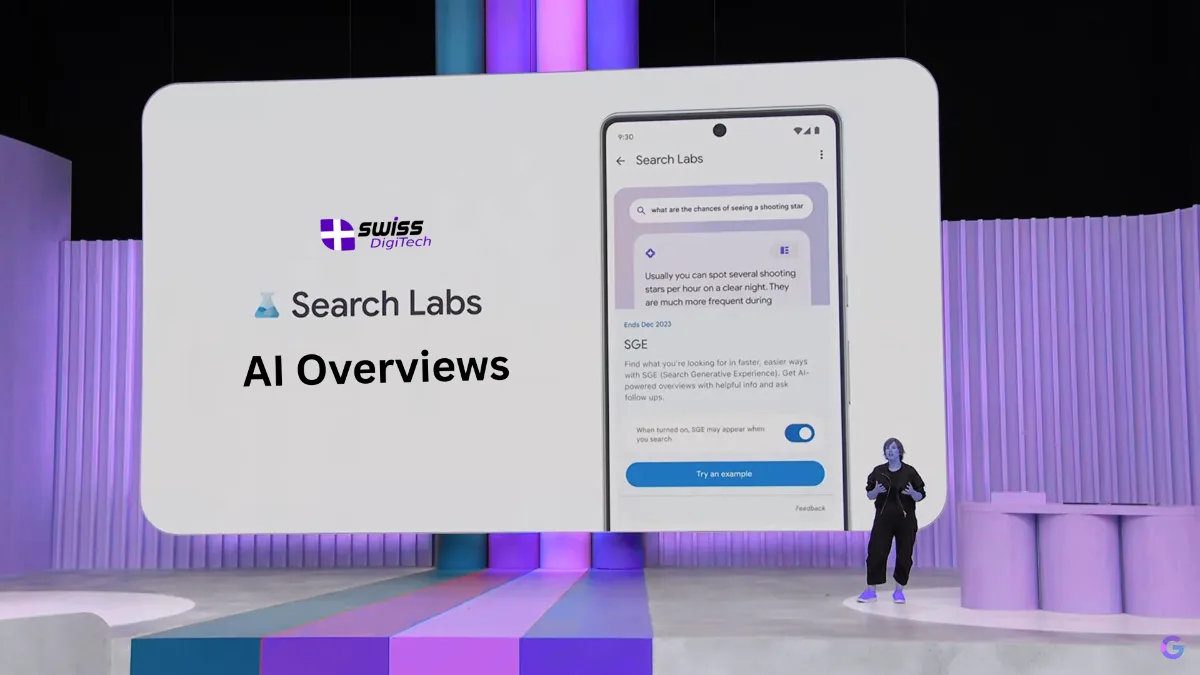
Google search is no longer just about blue links and traditional rankings. In 2026, Google AI Overviews and AI Mode (which grew out of the Search Generative Experience, or SGE, test) have changed how people search, read and interact with content.
If your website is not appearing inside AI Overviews or SGE answers, you’re already losing visibility, even if you rank on page one.
This guide explains how AI Overviews work, why SGE matters, and exactly how you can optimize your content to rank in Google AI-powered results in 2026.
What Are Google AI Overviews and AI Mode?
Google AI Overviews are AI-generated summaries that appear at the top of search results. These overviews answer user queries directly by pulling information from multiple trusted sources.
AI Mode is Google’s conversational search experience, launched in 2025 after the SGE test, that:
- Understands user intent deeply
- Generates conversational answers
- Reduces dependency on traditional rankings
Instead of showing 10 blue links, Google now:
- Shows AI summaries
- Cites trusted websites
- Encourages follow-up questions
If your content is not optimized for AI interpretation, Google will ignore it.
Why Ranking in AI Overviews Is Critical in 2026
Here’s why AI Overviews matter more than traditional SEO now:
- Zero-click searches are increasing rapidly
- Users get answers without scrolling
- AI picks sources, not just pages
- Brand visibility matters more than keyword position
Even websites ranking at #1 may not appear inside AI Overviews if Google doesn’t trust their content.
In simple words:
- Ranking ≠ Visibility in 2026
- AI inclusion = real visibility
How Google AI Overviews Choose Content
Google does NOT randomly select content for AI answers. It looks for very specific quality signals.
Key factors Google AI evaluates:
- Content clarity and structure
- First-hand experience
- Author expertise
- Source credibility
- Freshness and accuracy
- Semantic relevance (not keyword stuffing)
Google AI prefers content that:
- Explains concepts simply
- Uses real examples
- Answers questions completely
- Avoids fluff and filler
Step-by-Step: How to Rank in Google AI Overviews and AI Mode in 2026
1. Write for Questions, Not Keywords
AI Overviews are built around questions and intent, not just keywords.
Instead of targeting:
“AI SEO ranking tips”
Target:
- How does Google AI Overviews work?
- Can AI content rank in Google SGE?
- How to optimize for AI search in 2026?
Best practice:
- Use question-based subheadings
- Answer clearly in 2–4 sentences
- Expand with bullet points
Google AI often pulls direct answers from such sections.
2. Structure Content for AI Readability
AI prefers clean, scannable content.
Use:
- Clear H1, H2, H3 headings
- Short paragraphs (2–3 lines max)
- Bullet points and numbered lists
- Bold highlights for key insights
Example structure AI loves:
- Definition
- Explanation
- Benefits
- Steps
- Examples
Messy content = ignored content.
3. Show Real Experience (E-E-A-T Is Non-Negotiable)
Experience is one of the signals Google’s quality guidelines stress most.
Google wants to know:
- Have you actually done this?
- Are you speaking from real knowledge?
- Can users trust your advice?
How to show experience:
- Use phrases like “In our experience…”
- Share real-world observations
- Explain what worked and what didn’t
- Avoid generic AI-style writing
AI-only, emotionless content struggles badly now.
4. Optimize for Semantic SEO, Not Exact Match Keywords
Google AI understands context, not exact phrases.
Instead of repeating:
“Rank in Google AI Overviews”
Include related concepts:
- AI search optimization
- SGE ranking factors
- Generative search SEO
- Zero-click visibility
- AI-driven SERPs
This helps Google understand topic depth, which AI systems prefer.
5. Create “Answer-First” Content Blocks
AI Overviews often extract:
- Short explanations
- Bullet summaries
- Step-based instructions
Pro tip:
After every major heading, include a direct answer paragraph before expanding further.
Example:
Google AI Overviews selects content that is clear, authoritative, and structured. Pages that directly answer user queries with simple language are more likely to be cited.
This increases AI citation probability.
6. Add Freshness Signals Regularly
AI prefers recent and updated content, especially for fast-changing topics.
Do this:
- Update content every 3–6 months
- Add “Updated for 2026” references
- Refresh stats, examples, screenshots
- Modify headlines slightly if needed
Outdated content = invisible to AI.
7. Build Brand Authority, Not Just Links
AI Overviews favour brands, not anonymous sites.
Ways to build authority:
- Consistent brand mentions
- Author bios with expertise
- Internal linking between related topics
- Clear About & Contact pages
Google AI trusts recognized sources, even with fewer backlinks.
8. Optimize for Follow-Up Questions (AI Mode Advantage)
AI Mode lets users ask follow-up questions.
Your content should naturally answer:
- Why?
- How?
- What happens next?
- Is it safe?
- Does it work?
Use:
- FAQ sections
- “What to expect” headings
- Pros & cons lists
This keeps your site relevant across multiple AI responses.
Common Mistakes That Stop AI Rankings
Avoid these in 2026:
- Keyword stuffing
- Thin AI-generated content
- No real insights
- Long boring paragraphs
- Clickbait without value
- Ignoring user intent
Google AI filters such content aggressively.
How to Measure AI Overview Visibility
Google Search Console counts AI Overviews and AI Mode clicks in your normal Performance report but does not show them separately, but you can track indirectly:
- Sudden CTR drops with stable impressions
- Brand mentions in AI answers
- Traffic from informational queries
- Increased impressions without clicks
Tools and patterns are constantly evolving; early adoption gives a significant edge.
Frequently Asked Questions
Is SGE the same as AI Overviews?
Mostly. SGE was Google’s 2023 test of AI-generated answers. In 2024 it launched publicly as AI Overviews, and in 2025 Google added AI Mode, a full conversational search tab.
Can a small website appear in Google AI Overviews?
Yes. Google cites pages that answer the question clearly and are trusted on the topic, not only big brands. Focused pages with clear answers often get cited.
Final Thoughts: SEO in 2026 Is AI-First
Ranking in Google AI Overviews and AI Mode is not optional anymore; it’s the future of search visibility.
To succeed:
- Write for humans, structure for AI
- Focus on experience, not automation
- Answer questions clearly
- Build topical authority
- Stay updated consistently
Websites that adapt now will dominate AI search results for years to come.